

Resources
A friend gives and takes.
Are you the friend who always brings the snacks, organises the catch-ups, checks in on everyone and offers to lend a hand?
Perhaps you’re the neighbour who always takes in the bins, the person who cooks a meal when someone’s having a rough time, or the one who can always be counted on to help out.
Being there for others feels good, doesn’t it?
But what happens when you’re the one who needs a hand?
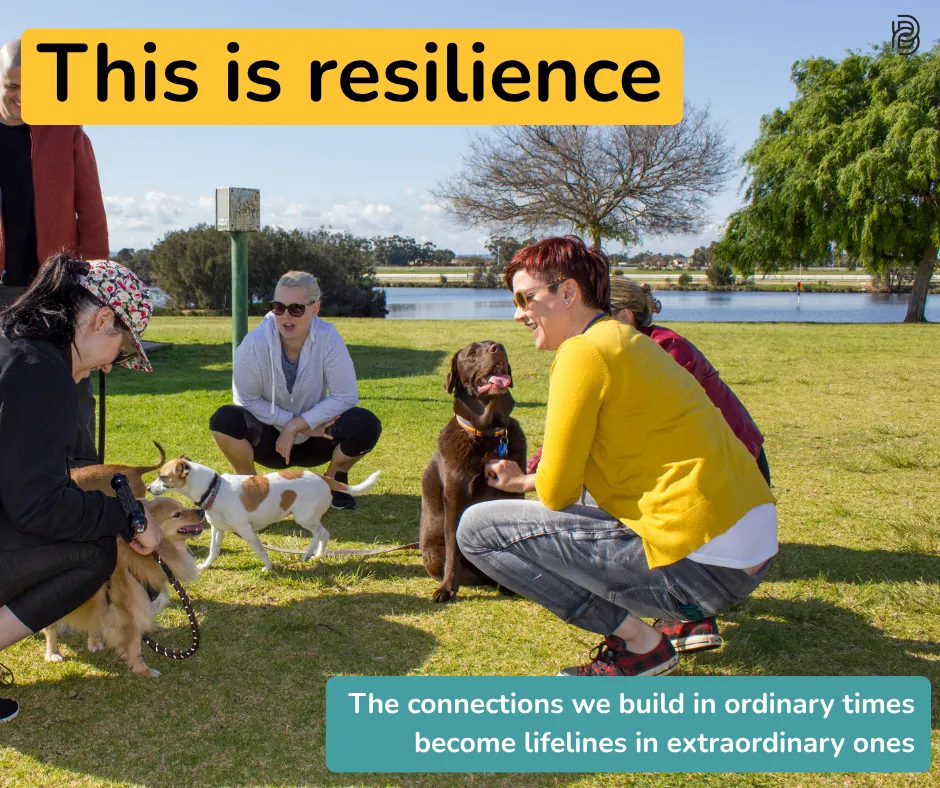
Do you find it easy to ask for help? Or are you more comfortable being the helper, even when you’re running low yourself?
Over the course of a two-year project in partnership with the Department of Fire and Emergency Services), our community building team explored how everyday relationships help people navigate life’s challenges, and how these connections contribute to acts of informal mutual support, and subsequently, greater community resilience. Subsequently, we produced a report called Hidden Lifelines which shares our findings in greater detail.
One of the key findings in this work we discovered was that mutual support doesn’t just mean offering to help everyone else; it means intentionally letting others help you too.
I am also learning that you cannot always give. You have to receive. It is a two-way street. Other people like to give too, and you have to let them give who they are.
We’re not meant to do everything alone
It’s easy to fall into the habit of thinking we should be able to manage on our own. We might worry about being a burden, feel uncomfortable asking for a favour or think we should repay kindness straight away.
I internalise a lot because I don’t like to burden other people with my problems. It seems to be that I am always trying to prove I am independent.
But when we never let others help us, we can unintentionally close the door on something important: their opportunity to care for us, too.
There are several people I have met through Befriend who I could share a difficult situation with, and I have. Something difficult is not as difficult when you share it with someone. The support goes both ways. I have taken a Befriend friend to the doctor. I have helped someone move. I have had friends over for dinner. Sometimes someone just needs somebody to talk to, and you make the time and say, “Tell me all about it”… I love helping other people. When you’re doing well, I’m doing well.
These small exchanges help relationships grow. They show us that we can rely on one another, and that everyone has something to offer – even if what they can give changes from one day to the next.
Through developing Hidden Lifelines, we explored how reciprocity, the process of giving and receiving, sits at the heart of mutual support. It’s not simply about being generous or burning yourself out trying to support everyone in your life. It’s about actively allowing support to flow in both directions.
There’s a common neighbourly parable that you might’ve heard of; when a new neighbour moves in next door, you pop over and ask if they have something you can borrow. A pinch of salt, a splash of milk, a flathead screwdriver. This gesture helps them, as the newcomer to town, feel like they’ve helped you and in turn, leaves the door ajar for them to more easily ask you for help in the future.
Sometimes you’re the one needing a pinch of salt, sometimes you’re the one with salt to give. Both are part of being human, and both are important for relationship building.
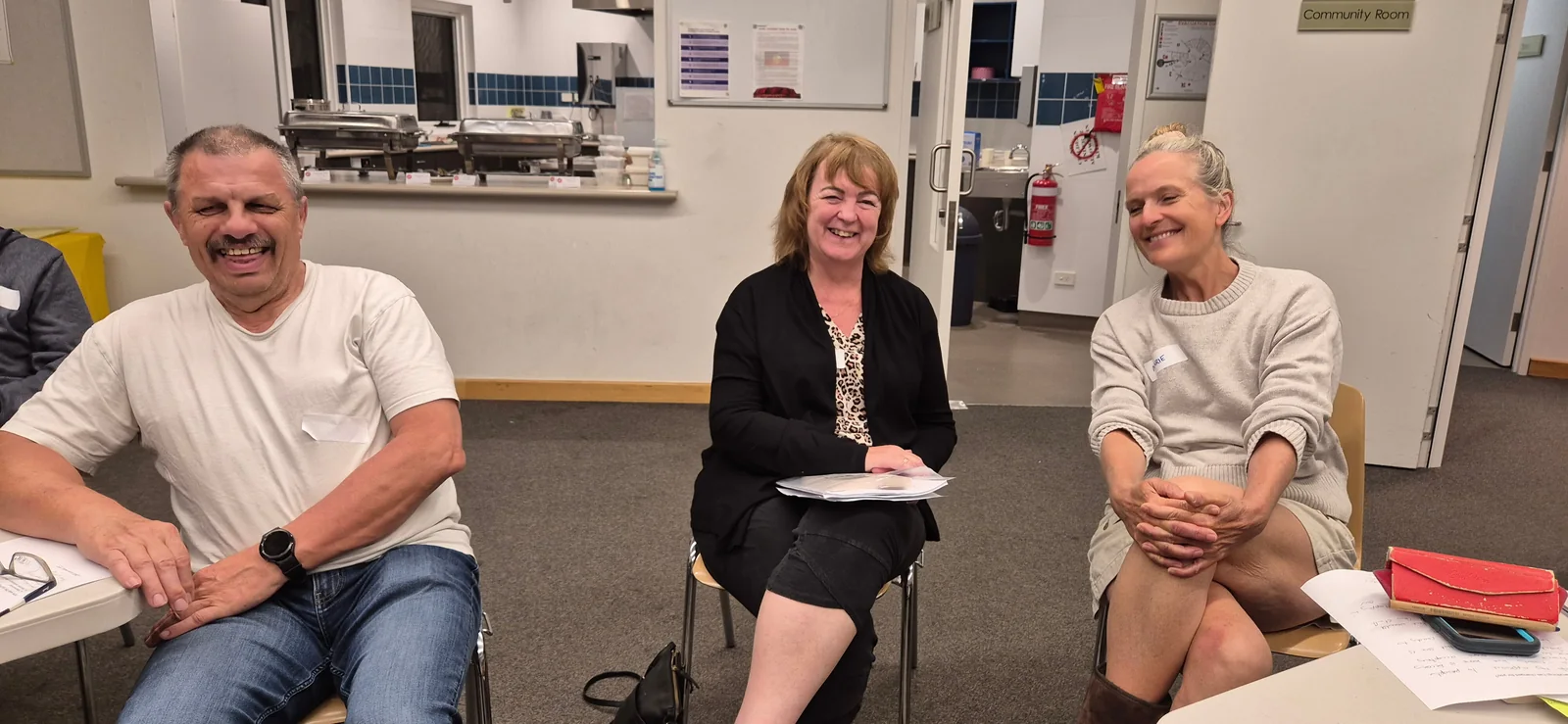
It takes a village
Building more reciprocal relationships doesn’t require a grand gesture. It can begin with a small shift in how we relate to the people around us.
You could:
- Offer to help a neighbour with something simple
- Share a skill, a meal, a spare item or a little of your time
- If someone offers to help, practise saying “Yes, thank you” instead of automatically saying, “I’m fine”
- Practice vulnerability and answer honestly, if you feel comfortable and safe to, when you’re asked ‘how are you?’
- Ask a friend for a hand with something you’ve been managing alone
- Think about what you have to offer your community, remembering that it doesn’t have to be time or money. A listening ear, a friendly introduction or a bit of encouragement can mean a lot, too
Reciprocity isn’t transactional, and relationships – like most living things – won’t live in perfect balance all the time. Perhaps it’s better to think of reciprocity as seasonal; sometimes one person needs more support than they can give, and at other times the roles may be reversed.
The goal is to create relationships where people feel comfortable contributing in the ways they can, and where receiving help is just as welcome as offering it.
This culture of support lays the foundations for a vital village; a network of people we can rely on during hard times.
With thanks to the Department of Fire and Emergency Services for their support in bringing this project to life. Please note that some names have been changed to protect the privacy of community members who participated in the research.
Related articles
Looking after each other
When does a friendly face become someone you can count on? Community members share how practical help and being able…
View this resource
The power of a warm welcome
Walking into a new group can be nerve-racking. Community members told us how small gestures of welcome helped them come…
View this resource 
Little offers make a big difference
Good things often start with a small offer: a hand with something, an invitation, a skill shared. We look at…
View this resource 
What's the relationship between a craft group and a bushfire?
Friendship is often treated as a nice-to-have. In the first post of our This Is Resilience series, we look at…
View this resource 
Gift Discovery and deep listening: what happens when a team really listens to each other
Before a team of student consultants got stuck into their work for Befriend, Dave and Elaine gave them a taste…
View this resource 
Befriend wins the 2026 WA Inclusive Volunteering Award
We are absolutely over the moon to share that Befriend has been named the winner of the Inclusive Volunteering Award…
View this resource 
Helping Others Feel More Connected
Supporting someone to feel more connected means creating the right conditions for friendships to grow. By focusing on shared interests,…
View this resource 
Give the gift of connection this Christmas!
Human connection is the best gift of all. We tend to think of the festive season as a busy time…
View this resource 
"I Like People!"
Tim’s story shows how connection grows through purpose, creativity, and contribution. Living with expressive aphasia and using a wheelchair, he…
View this resource 
Nurturing your own community idea to life
Nurturing a new community idea to life can feel like stepping into the unknown – exciting and a little intimidating!
View this resource 
The Empathy Effect: sparking friendships through the art of understanding each other!
Empathy is a powerful way to build connection and friendship, even with strangers. By showing curiosity, listening deeply, and keeping…
View this resource 
Give it a Go in Swan
Give it a Go is a fun, free travelling community adventure happening across different locations in the City of Swan!…
View this resource 
Open Communities - coming together in learning
Open Communities invites community builders, volunteers and organisations to co-design a shared learning space for connection and collaboration. Through gatherings,…
View this resource 
Feeling awkward about meeting new people? It's totally natural!
Do you often find yourself saying “I’d like to go… but I don’t really know anyone and it might be…
View this resource 
Supporting Community: A Network Development Project in the City of Kwinana
We are a non-profit social enterprise based in Perth, Western Australia who exist for one single purpose; to foster inclusive,…
View this resource 
How do I make friends in Perth if I’m introverted?
You want to meet people, form friendships and feel less alone, but you think that your introverted nature is an…
View this resource 
Creating a friendship that lasts
Do you find that even if you chat with new people while out and about, these interactions don’t lead to…
View this resource Everyday connectors
COVID-19 was a strange time. It was a unique moment in history where we bunkered down safely at home wherever…
View this resource Want to keep up to date?
Be the first to hear about catch ups, seminars and other events by subscribing to our mailing list.
By submitting your information you agree to our Terms & Conditions and Privacy Policy.
By submitting your information you agree to our Terms & Conditions and Privacy Policy.