

Resources
Once we knew we could talk about problems without being judged, that's what brought us closer together
How does a friendship become more than just someone to spend time with? How do the people in our craft group, neighbours, and colleagues become people we can turn to when life gets difficult?
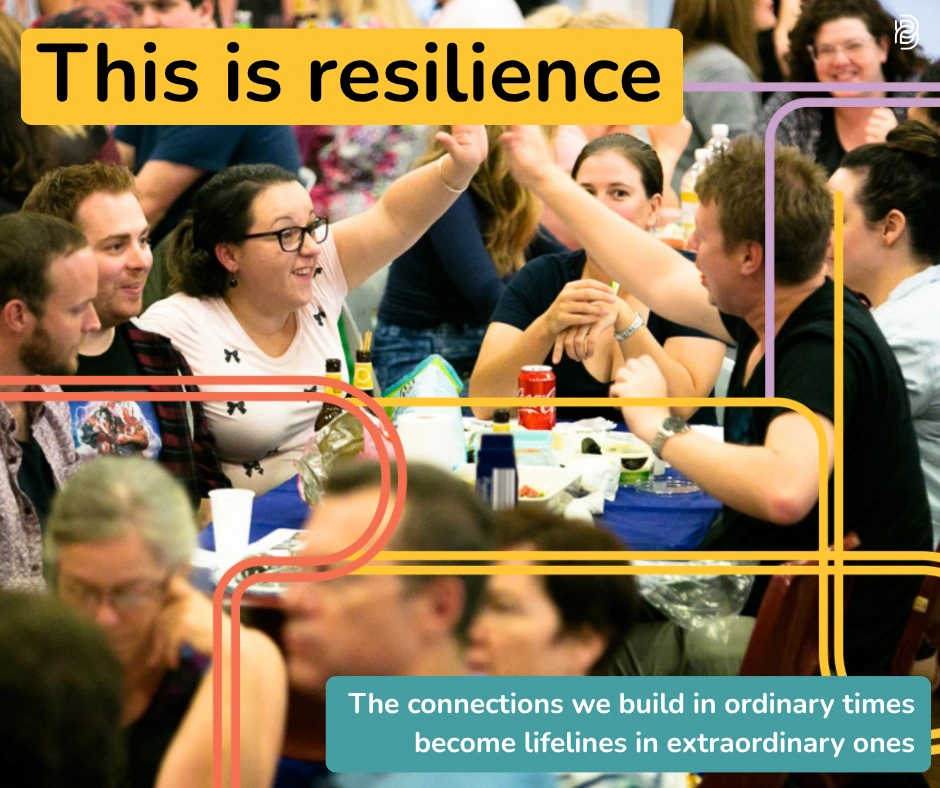
Through our work exploring resilience in communities, we’ve learnt that strong communities are woven together through acts of informal mutual support, both practical and emotional.
One community member told us “once we knew we could talk about problems without being judged, that’s what brought us closer together.”
Another said “There’s a lady that has been in and out of hospital through hips and knees. The support has always been there. It’s always, “Do you need anything? Can we come and visit? Do you need help when you get home?” The support is there if you need it.”
It’s a simple observation, but it tells us something important about how resilience grows around us.
When we feel that we have people in our lives that we can depend on, and who can depend on us, we all feel more prepared for the unexpected, and that’s when the everyday connections we’re making – at work, in our social groups, in our neighbourhoods – can become something much more.
From friendly faces to people we can count on
Through a two-year project exploring community resilience (in partnership with the Department of Fire and Emergency Services), we explored how relationships formed through everyday activities can grow into meaningful sources of mutual support.
Community members described gestures of practical support from within their social and community groups that helped them to feel seen, heard and held during difficult times.
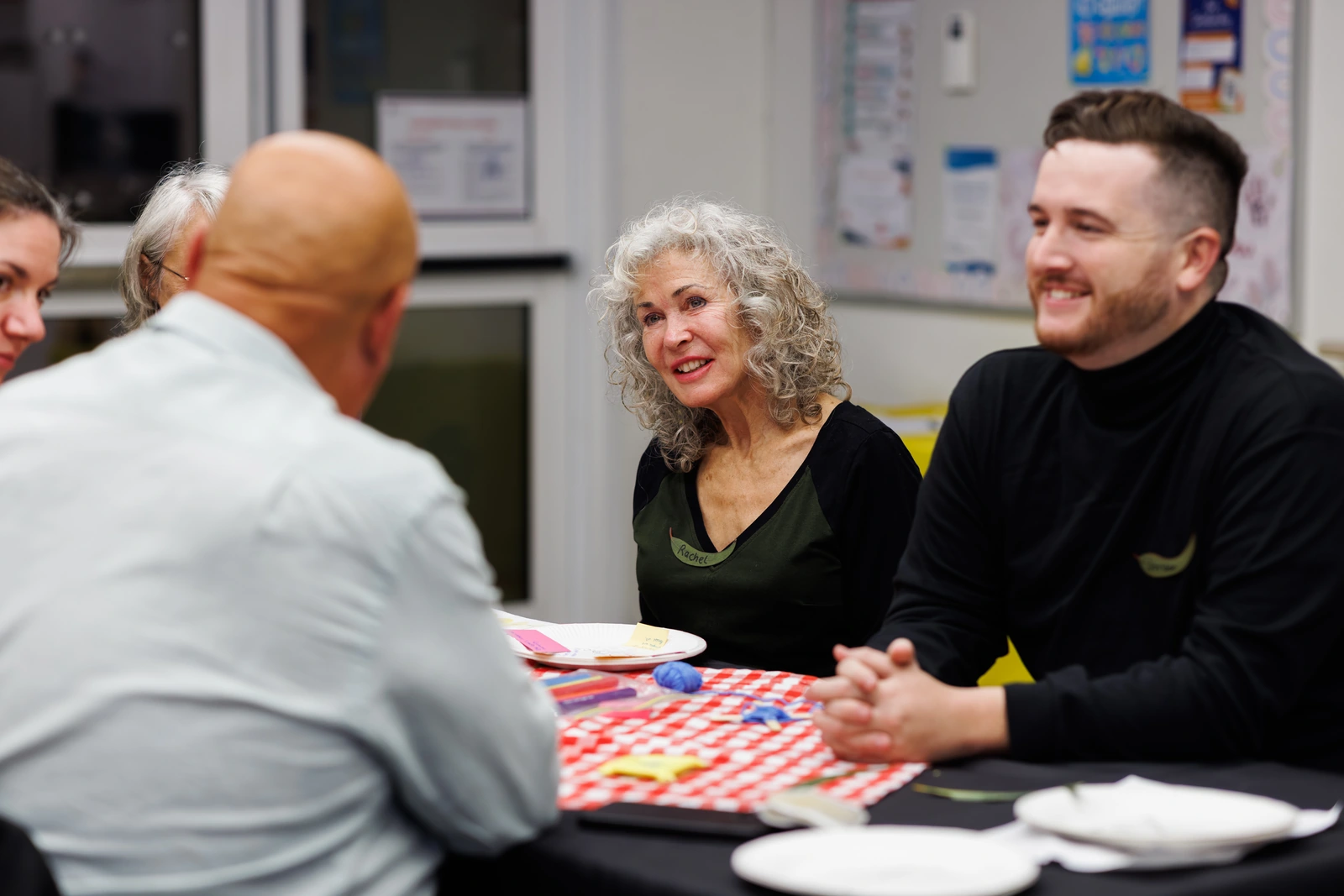
We look after each other. If somebody needs a lift, people pick them up. If somebody is unwell, people visit. If somebody needs to talk, there is someone there.
Sometimes I can't get out of bed because I have MS and Crohn's Disease. Some days I'm in bed for three days. When I was very sick with a migraine and had been in bed for five days, Gayatri quietly came to my house, did the housework and checked on me. I didn't even know she'd been there until my daughter told me. I hadn't asked. She just turned up.
If a family member has passed away, people step in. They look after animals or houses. If someone needs furniture, another person has furniture to pass on. If somebody needs a trade, you can normally find someone who can help without massive costs. We’ve even found a room when somebody has gone homeless for a period of time.
When she had a home inspection by her agent, I offered to help clean so that she would pass the inspection, as her health prevented her from doing some things. This became a regular thing at the three-monthly inspections. I would help her lift and move things, clean windows, dust blinds and clean throughout.
You might notice that these aren’t necessarily all grand gestures. They’re ordinary acts of care, made possible by each individual intentionally stepping up and in when they see an opportunity to make someone’s life easier.
Another finding from our research showed us that gestures of support don’t always need to be practical. Sometimes, knowing you can talk openly with someone who won’t judge you is a form of support in itself.
If I am having a difficult time, there are people from Befriend I can call and say, “I am feeling insecure,” or, “I am feeling whatever.” We can talk about it and usually laugh about it. Those are things you do not share with everyone.
One day she asked how I was, and I told her I hadn’t been very good and couldn’t get out of bed. When we left, she spoke to me in the car park and tried to help me think about ways to get out more. It made me feel that someone actually cared for me and about my health. It was quite touching that she would take the time to speak with me and try to help me out of the way I had been feeling.
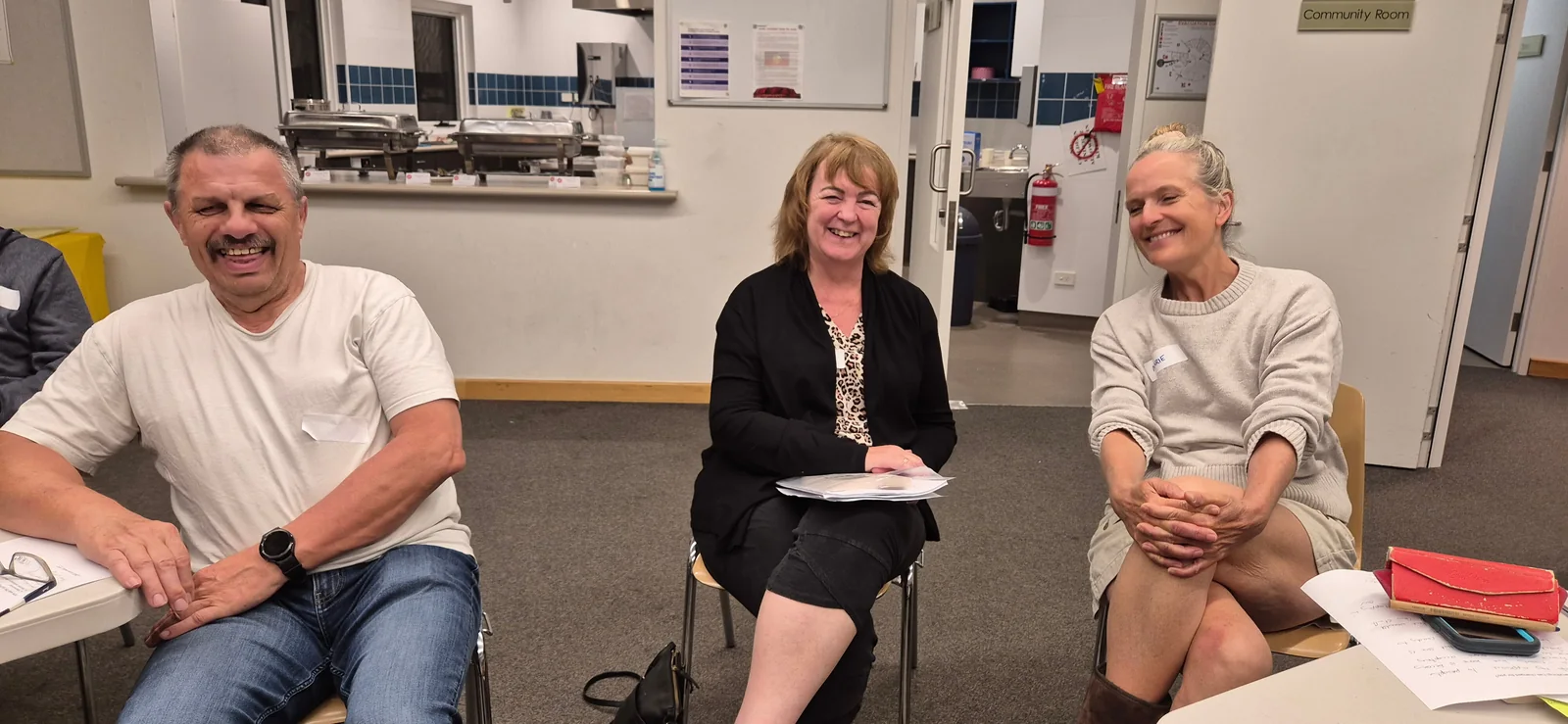
How can we strengthen the connections around us?
We don’t need to wait until someone is having a difficult time to build the kind of relationships where support feels possible.
We can start small:
- Check in with someone you haven’t seen for a while
- Make time for a conversation that goes beyond “how’s your week?”
- Listen when someone shares something difficult (without feeling that you need to fix it)
- Offer practical help when you can, even if it’s something seemingly small (hint; no act of support is ever too small)
- Gently let someone know when you’re having a hard time, if you feel comfortable and safe doing so
- Keep showing up to the groups and gatherings where familiar faces can gradually become friends
You don’t have to do all of these things all of the time, and you don’t have to be everyone’s support person. Even small, occasional acts of care can help relationships deepen over time.
Who’s in your corner?
Take a moment to think about the people in your life.
- Who could you talk to if things weren’t going well?
- Who might notice if you stopped showing up?
- Who do you check in on, and who checks in on you?
Your village might include close friends and family, but it might also include neighbours, people from a local group, workmates or someone you regularly bump into in your community. You might already have more connections than you realise. Perhaps there’s one relationship you’d like to nurture a little more, or someone you could reach out to today.
Our work writing the Hidden Lifelines report reminds us that resilience isn’t only something we draw on when life goes wrong. It’s something we practise through the relationships we cultivate every day. Every time we listen without judgement, offer a helping hand, accept support or make space for someone to be themselves, we’re helping build a community where people can look out for one another.
With thanks to the Department of Fire and Emergency Services for their support in bringing this project to life. Please note that some names have been changed to protect the privacy of community members who participated in the research.
Related articles
The art of giving and receiving
Are you always the helper? Mutual support means letting others care for you too. We explore why receiving help matters…
View this resource
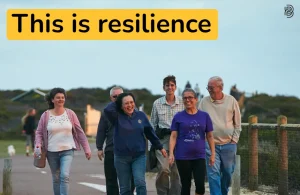
The power of a warm welcome
Walking into a new group can be nerve-racking. Community members told us how small gestures of welcome helped them come…
View this resource 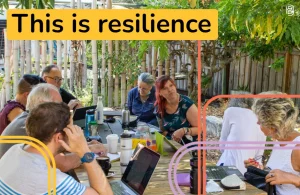
Little offers make a big difference
Good things often start with a small offer: a hand with something, an invitation, a skill shared. We look at…
View this resource 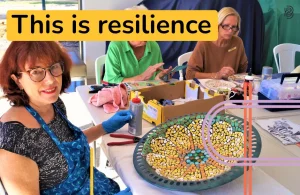
What's the relationship between a craft group and a bushfire?
Friendship is often treated as a nice-to-have. In the first post of our This Is Resilience series, we look at…
View this resource 
Gift Discovery and deep listening: what happens when a team really listens to each other
Before a team of student consultants got stuck into their work for Befriend, Dave and Elaine gave them a taste…
View this resource 
Befriend wins the 2026 WA Inclusive Volunteering Award
We are absolutely over the moon to share that Befriend has been named the winner of the Inclusive Volunteering Award…
View this resource 
Helping Others Feel More Connected
Supporting someone to feel more connected means creating the right conditions for friendships to grow. By focusing on shared interests,…
View this resource 
Give the gift of connection this Christmas!
Human connection is the best gift of all. We tend to think of the festive season as a busy time…
View this resource 
"I Like People!"
Tim’s story shows how connection grows through purpose, creativity, and contribution. Living with expressive aphasia and using a wheelchair, he…
View this resource 
Nurturing your own community idea to life
Nurturing a new community idea to life can feel like stepping into the unknown – exciting and a little intimidating!
View this resource 
The Empathy Effect: sparking friendships through the art of understanding each other!
Empathy is a powerful way to build connection and friendship, even with strangers. By showing curiosity, listening deeply, and keeping…
View this resource 
Give it a Go in Swan
Give it a Go is a fun, free travelling community adventure happening across different locations in the City of Swan!…
View this resource 
Open Communities - coming together in learning
Open Communities invites community builders, volunteers and organisations to co-design a shared learning space for connection and collaboration. Through gatherings,…
View this resource 
Feeling awkward about meeting new people? It's totally natural!
Do you often find yourself saying “I’d like to go… but I don’t really know anyone and it might be…
View this resource 
Supporting Community: A Network Development Project in the City of Kwinana
We are a non-profit social enterprise based in Perth, Western Australia who exist for one single purpose; to foster inclusive,…
View this resource 
How do I make friends in Perth if I’m introverted?
You want to meet people, form friendships and feel less alone, but you think that your introverted nature is an…
View this resource 
Creating a friendship that lasts
Do you find that even if you chat with new people while out and about, these interactions don’t lead to…
View this resource Everyday connectors
COVID-19 was a strange time. It was a unique moment in history where we bunkered down safely at home wherever…
View this resource Want to keep up to date?
Be the first to hear about catch ups, seminars and other events by subscribing to our mailing list.
By submitting your information you agree to our Terms & Conditions and Privacy Policy.
By submitting your information you agree to our Terms & Conditions and Privacy Policy.